
The Architecture Behind the Brooklyn Museum's New African Art Galleries
The Brooklyn Museum holds one of the most significant African art collections in the United States, with roughly 4,500 objects. For years, much of it sat in storage simply because there was no dedicated permanent space to show it.
That changes this summer. Renovations begin in summer 2026 on a 6,400-square-foot permanent home for the Arts of Africa collection on the third floor, designed by Peterson Rich Office. The galleries are expected to open in fall 2027. The project costs $13 million, funded by the city, federal grants, and private foundations. The architectural challenge here is interesting.
Working Inside a Landmark
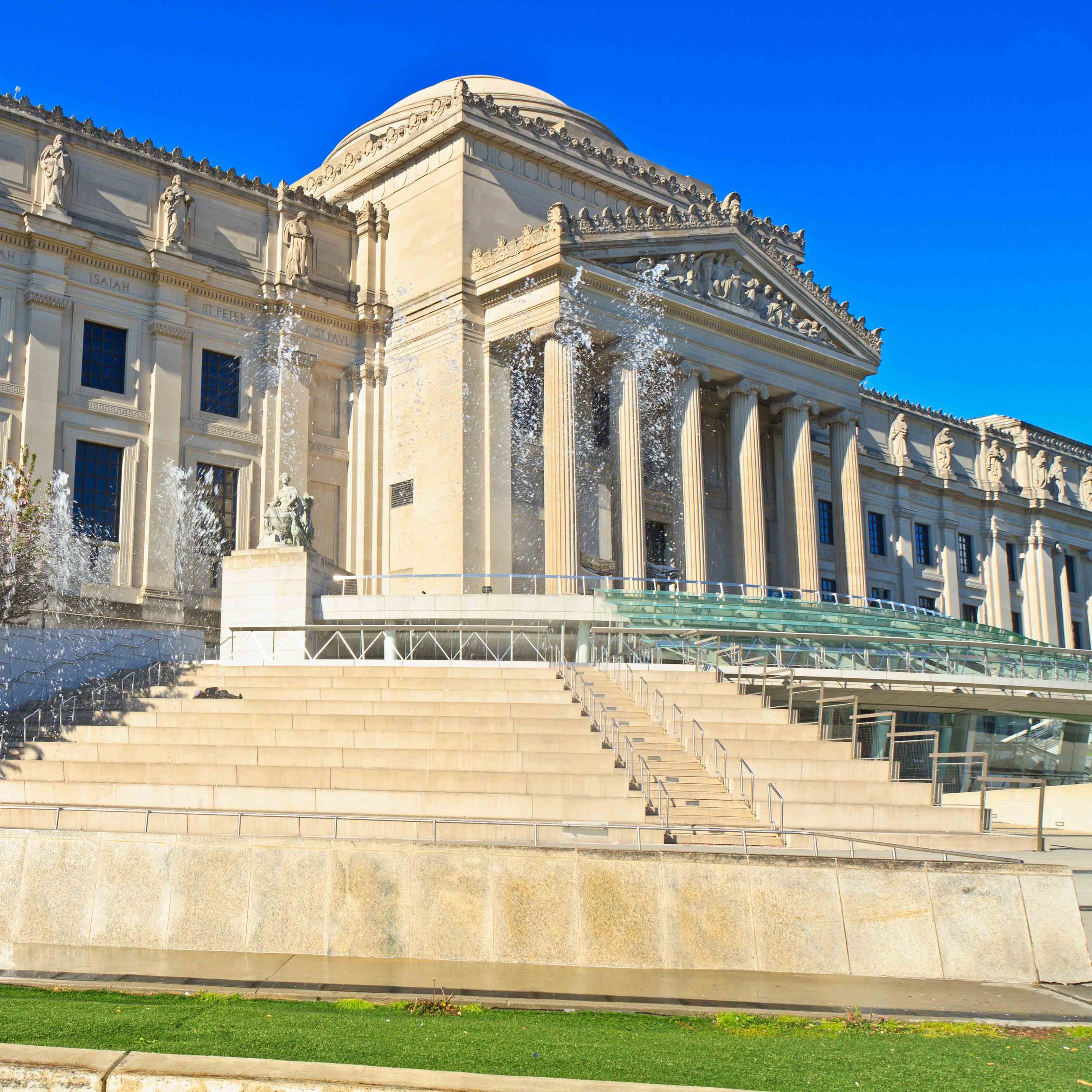
The museum is a New York City landmark. Originally designed by McKim, Mead and White in 1893, it is a Beaux-Arts institution with protected historic fabric. Any intervention must work within the existing rooms and satisfy the Landmarks Preservation Commission. Beyer Blinder Belle is the preservation consultant on the project.
The four galleries being renovated are not uniform. The first room from 1904 has 25-foot ceilings and generous natural light. The adjacent 1920s room is more intimate and better suited to light-sensitive works. Rather than homogenizing them into a neutral container, the design embraces the distinct character and proportions of each space.
The Enfilade Decision
The most significant architectural move is reopening the original 1897 enfilade, a sequence of aligned doorways that once connected the galleries. Over time, these openings were filled in. Peterson Rich Office is removing those infills to restore the sightlines, directly connecting the Arts of Africa galleries to the Egyptian art galleries for the first time.
This connection dissolves a false art historical distinction that separated Egypt from the rest of the African continent. The architecture is doing curatorial work. Restoring this physical connection enables an intellectual connection that was always accurate but never visible in the layout.
Honest Infrastructure
The new mechanical and lighting systems are handled cleanly. Rather than concealing them behind dropped ceilings, the infrastructure is exposed and finished in a bold accent color. Original plaster ceilings read as the past, and new metal elements read as the present. You can clearly see what is old and what is new.
This honest construction is highly appropriate in a landmarked building. Exposed systems require less construction and are easier to install, maintain, and replace.
What This Project Actually Represents
Renovating unused storage space inside a landmark into functional gallery space makes perfect sense for sustainability. There is no new construction, no expanded footprint, and no demolition of historic fabric. The embodied carbon stays in the building, and the additions are minimal and reversible.
The Brooklyn Museum has been quietly improving its galleries for twenty-five years. The Arts of Africa project is the next chapter in that effort, executed with real architectural care. Renovations begin this summer, and the galleries open in fall 2027.
The Architecture Behind the Brooklyn Museum's New African Art Galleries