
The Brick Made of Laundry: Why Your Old T-Shirts Are Entering Construction
We have all done it. We clean out our closets, bag up our old jeans and t-shirts, and drop them in a donation bin, assuming they will find a second life with someone in need.
The reality of global textile waste is complex. While many items are successfully reused, the world produces a massive amount of waste annually. Estimates vary by source (ranging from roughly 80 to over 100 million tons), with 92 million tons being a common benchmark. A significant portion of donated clothing is exported to places like Ghana or the Atacama Desert in Chile. While not all of it ends up in a landfill, a large volume of fibers remains in these regions for years without decomposing.
A new wave of material science is asking a different question. If we can recycle plastic bottles into park benches, why can’t we recycle cotton into building materials?
Clarisse Merlet
While studying architecture in Paris in 2017, Clarisse Merlet noticed a construction industry requiring constant raw materials and a fashion industry managing a surplus of waste. She decided to bridge these two sectors with a product called FabBRICK.
The process takes discarded clothes too damaged to be reworn and shreds them into a localized fluff. This material is mixed with an ecological, bio-sourced binder (a starch-based glue) and pressed into a mechanical mold. Unlike firing clay bricks or curing concrete, there is no intense heat or complex chemical reaction involved. The method relies on simple compression and adhesion. Each brick recycles the equivalent of two to three old t-shirts, creating a solid component that looks like stone but feels like dense felt.
The Superpower: Acoustics
Using cotton in a wall comes down to physics. Traditional building materials like brick, glass, and concrete are dense and "hard," which means they reflect sound waves and create echoes in large spaces. Fabric is a "soft" material that provides acoustic absorption.
By using textile bricks for interior partitions or wall coverings, designers create a sound-absorbing surface. These materials provide acoustic dampening and some insulation compared to dense masonry, but they are not replacements for high-performance exterior envelope systems. They essentially turn the finish of the wall into a functional acoustic layer.
The Truth Over Agreement (The NYC Reality)
In New York, FabBRICK is strictly intended for interior use, such as decorative partitions, furniture, and retail displays. Crucially, these bricks do not replace sheetrock (gypsum board). In NYC, sheetrock is used to meet specific fire-resistance ratings required by code. FabBRICK is classified as a wall cladding or "revêtement mural," meaning it is an overlay, not a structural wall board.
Furthermore, materials used in commercial interiors must comply with strict flame spread and fire testing standards. In a city with rigorous fire regulations, a material made of shredded clothes faces significant regulatory hurdles. While the bricks are treated to be fire-resistant, they are currently an aesthetic and acoustic feature, not a replacement for fire-rated building components like certified demising walls.
Conclusion
For interior environments (the partitions that divide our offices and lobbies) this material offers a functional alternative to traditional finishes. It suggests that a portion of the solution to the global fashion waste crisis might be found in our walls rather than our closets.
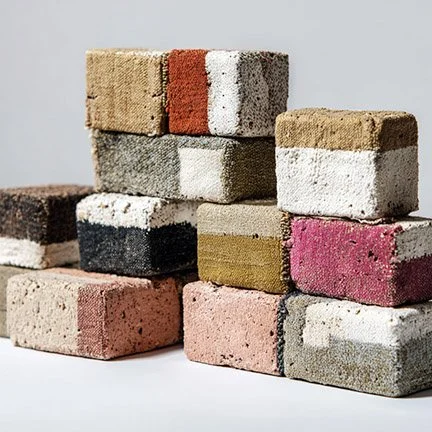
A new wave of material science is asking a different question. If we can recycle plastic bottles into park benches, why can’t we recycle cotton into building materials?