
Hotel Co-Working Lounges: How Shared Spaces Became the New Places to Work
The lobbies of NYC hotels have evolved into functional work areas that let guests handle business tasks, hold brief meetings, and make phone calls. With a laptop and a comfortable chair, these casual spaces become effective professional work zones. Hotels in urban areas, including New York City, now convert public areas into co-working lounges that offer independent workspaces and meeting spots at accessible rates.
Why Co-Working Lounges Are Emerging
Hybrid work has pushed people to rethink what counts as a workplace. Most people need Wi-Fi, comfortable seating, and quiet conditions, but not a full private office. Hoteliers updating their facilities often ask what architectural services can offer in this context, and the answer is the adaptation of underused square footage into revenue-generating hubs. These lounges benefit hotels by keeping spaces active and vibrant throughout the day.
Co-Working Lounges Operate as Sustainable Spaces
Sustainability requires more than material selection; it depends on using space wisely and reducing construction where possible.
Maximize existing space: Hotels can convert current lounges into business centers instead of building standalone facilities or purchasing extra space. This reduces waste and construction expenses.
Increase daily utilization: A lobby that once sat empty during daytime hours can now function as an active workplace. The same square footage gains value through expanded use.
Reduce demand for new small offices: Hotel-based flexible work programs decrease the need to build small offices or standalone co-working facilities. Guests who feel comfortable working in the lobby often extend their stays, which improves resource efficiency and reduces turnover.
The Context
New York City is an ideal testing ground for these ideas because the city has limited available space and people adapt their work habits quickly. Hotels already have public areas in place, which makes it easier to create functional work zones that reinforce brand identity. They design their workspaces by forming shared areas alongside pockets of privacy. This often means turning lobby borders into operational spaces while maintaining core hotel functions. Co-working lounges give hotels financial advantages, improve guest satisfaction, and provide new meeting and work areas for residents who lack access to traditional offices.
The Ace Hotel Blueprint
The Ace Hotel on 29th Street shaped its lobby as a public area and community hub before remote work grew popular. The space draws designers, entrepreneurs, and students who work alongside visitors. It succeeds through purposeful design, including varied seating zones, ample electrical outlets, and sound-dampening elements like rugs and curtains, which let people stay longer without fatigue. (acehotel.com/new-york/)
Designing for the Future
To achieve the best interior design outcome, these spaces must balance privacy with openness. Teams create private work areas with low partitions, plant groupings, and tight furniture arrangements that preserve the room’s natural flow. They also layer lighting, combining general illumination with task lighting, and use sound-controlling materials. Lounge furniture should be adjustable so users can shift easily between focused work and collaboration.
Conclusion
Hotel co-working lounges show a smart evolution of public areas, meeting real user needs with sustainable workplace solutions that do not require new construction. The team at Irving Yee Architecture views these spaces as active parts of an ongoing development process that uses deliberate methods to deliver sustainable design while increasing the value of existing buildings.
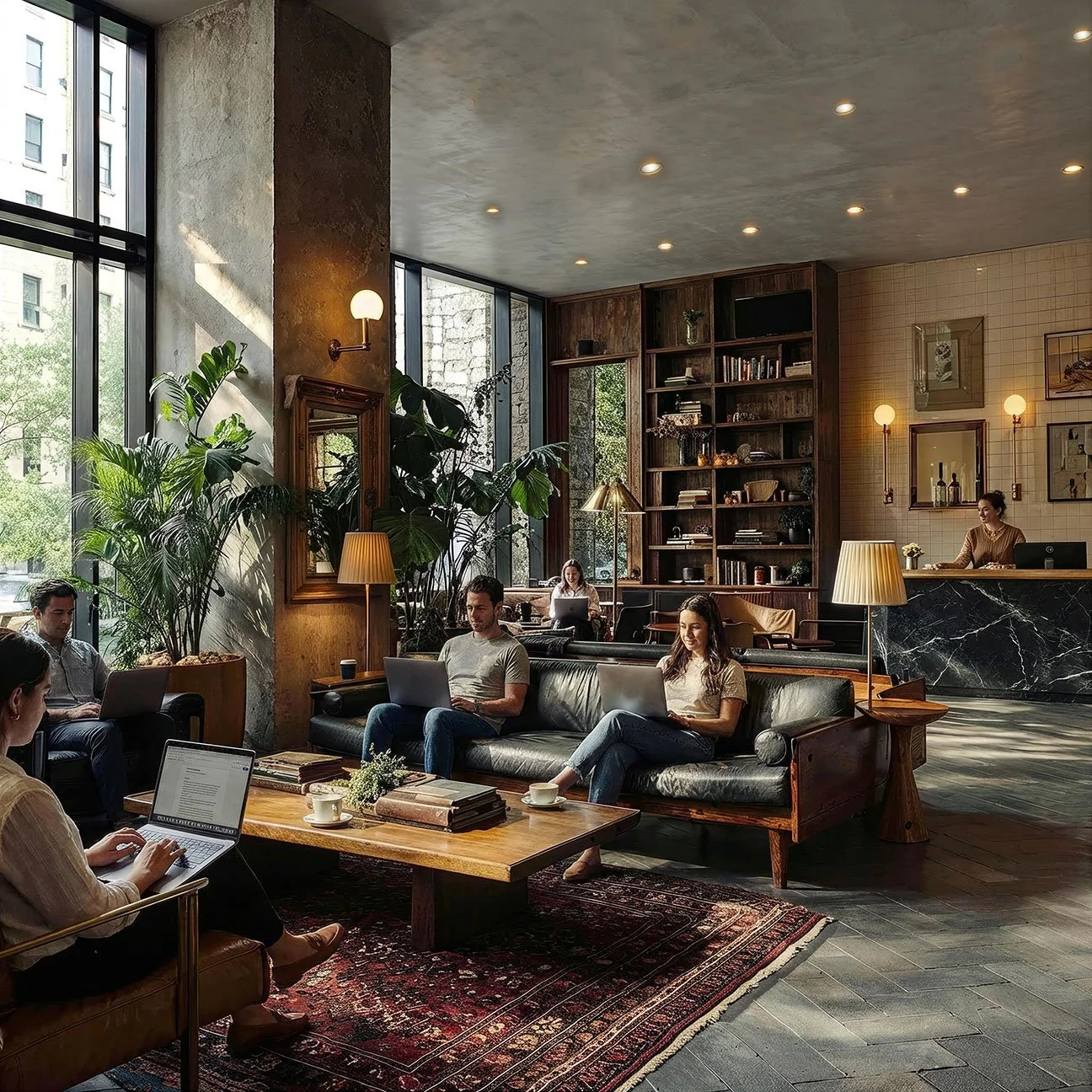
Manhattan hotels lobbies into sustainable co-working lounges. Ideal for hybrid work, offering flexible, revenue-generating spaces.