
The Vision for Penn Station, What the 2023 Proposal Actually Looked Like and Why It Matters
The Vision for Penn Station, What the 2023 Proposal Actually Looked Like and Why It Matters
Serving 600,000 daily riders, Penn Station is North America's busiest and most congested transit hub. It has been that way for over sixty years.
In 2023, private developers proposed an $8 billion overhaul. Although it was not officially adopted, the detailed vision remains one of the most consequential architectural pitches in New York City in a generation. Here is what they proposed.
What Was Lost in 1963
The original 1910 Pennsylvania Station, designed by McKim, Mead and White, was a Beaux-Arts masterpiece. Modeled on Rome's Baths of Caracalla, it featured a 150-foot-high waiting room and a massive glass and steel concourse. Its demolition in 1963, driven by real estate economics, was a major turning point. It directly triggered the creation of New York City's Landmarks Preservation Law in 1965. No single building loss has had a more lasting regulatory consequence in the city. The subterranean station that replaced it functions more like a basement and is consistently ranked among the most challenging transit hubs to navigate.
The ASTM and PAU Proposal
In 2023, developer ASTM North America and a design team led by Practice for Architecture and Urbanism (PAU) released a comprehensive vision. Their central proposal was a new train hall along Eighth Avenue. This required buying and removing the Theater at Madison Square Garden, while leaving the main arena intact. In the theater's place, a stone-clad facade would span from West 31st to West 33rd Streets. Inside, the concourse would become a single large level with 50-foot ceilings, natural light, bronze finishes, and a large station clock.
PAU described the approach as an architecture of memory. Drawing on the original station and the adjacent Farley Building, the firm called it a mirror of a mirror of a ghost. The design carried the memory of the original space, pitching contemporary infrastructure with historic references rather than a direct reproduction.
The Sustainability Argument
Penn Station serves Amtrak, the Long Island Rail Road, and NJ Transit. A well-functioning station is a massive piece of climate infrastructure for the Northeast. Improving the passenger experience makes rail travel more attractive relative to driving, resulting in direct emissions reductions at a regional scale. The 2023 design also introduced natural light to reduce artificial lighting loads. Reorganizing the concourse into a single level aimed to improve circulation efficiency for the three active rail systems.
The Reality of the Pitch
Despite detailed renderings, this was an unsolicited bid by a private developer. It was never officially adopted by the MTA, Amtrak, or NJ Transit. The agencies pushed back, citing the estimated $1 billion cost just to acquire the theater property. Building inside a fully operational hub is technically complex. While the design and funding frameworks exist, the project was never officially selected. The future of Penn Station remains an ongoing debate among agencies, developers, and the city.
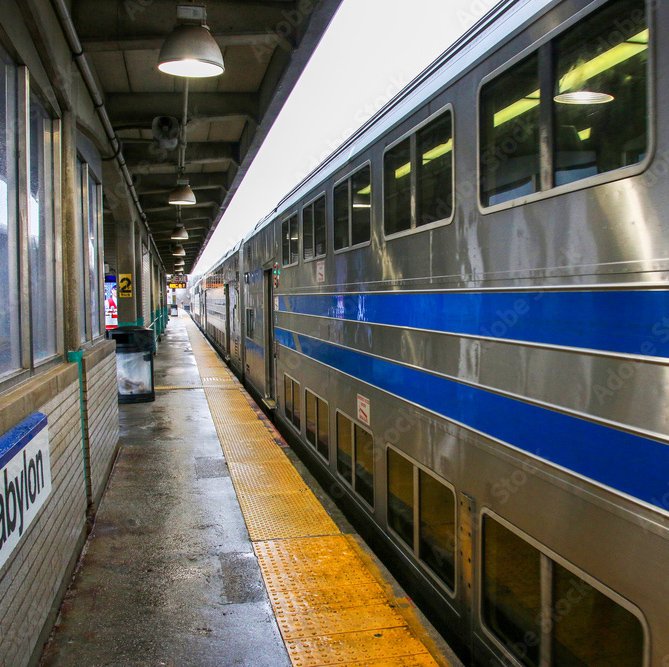
Serving 600,000 daily riders, Penn Station is North America's busiest and most congested transit hub. It has been that way for over sixty years.