
Active Architecture, How Spatial Layouts Guide Human Movement
Architecture does not determine exactly how people behave, but it can strongly influence how they move through and experience a space. Every floor plan establishes routes, points of connection and choices between different forms of circulation.
In many multistory buildings, elevators are more visible and convenient than everyday-use stairs, while stairways are often treated primarily as enclosed fire exits. Active Design challenges that approach by asking how architecture can make routine physical movement more visible, appealing and convenient without compromising accessibility or efficiency.
The concept was formalized in New York City’s Active Design Guidelines, first published in 2010. The guidelines brought together research and professional best practices for incorporating physical activity into buildings, streets and public spaces through everyday design decisions.
Making Stairs Visible and Inviting
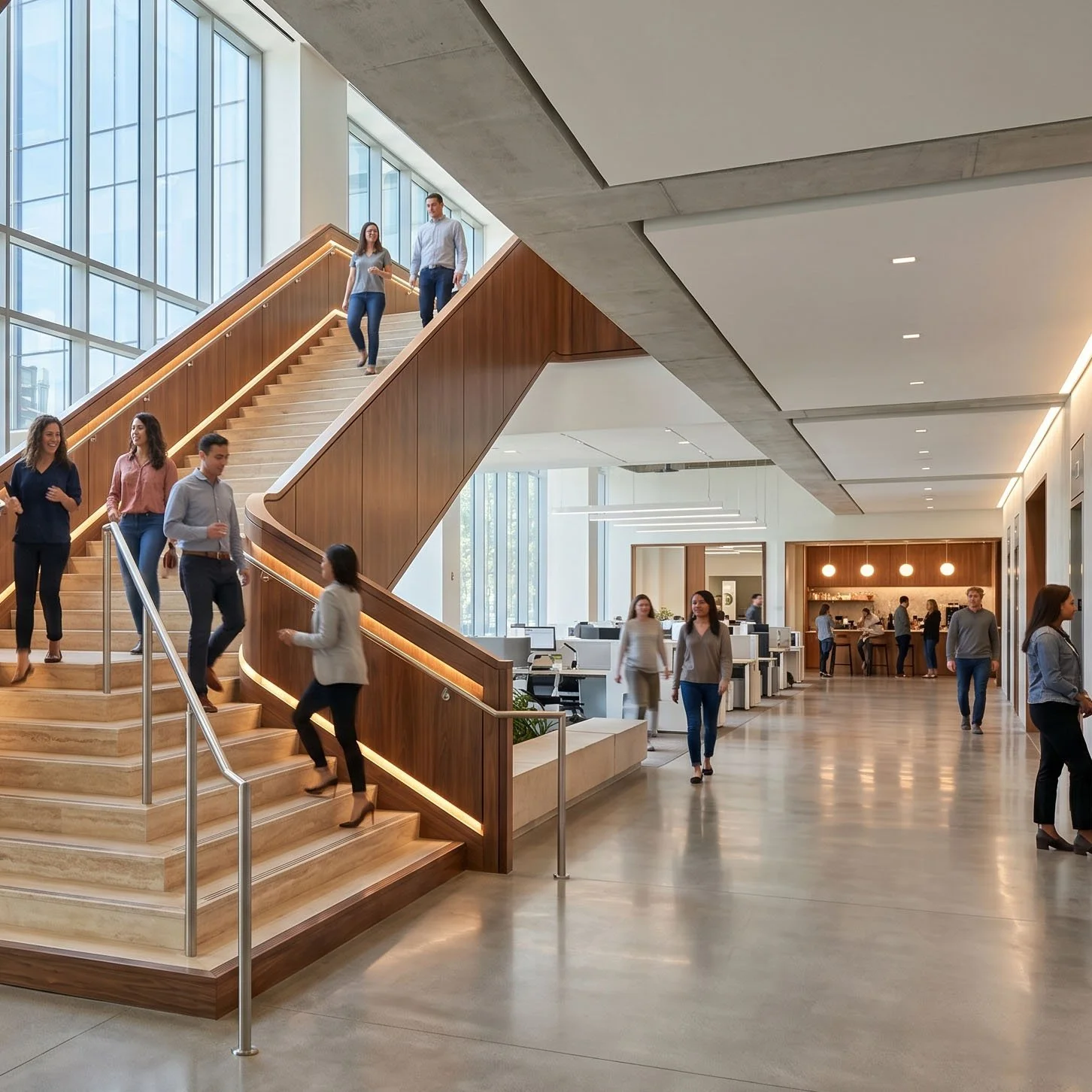
People are more likely to use stairs when they are easy to find, conveniently located, well maintained and pleasant to occupy.
A staircase positioned near a main circulation route can become more than a functional connection between floors. Natural light, clear signage, comfortable proportions, artwork and thoughtful architectural detailing can make it feel like an intentional part of the building rather than a secondary service space.
Materials also affect how a staircase is perceived. Warm wood, stone, metal and integrated lighting can create a welcoming environment, but Active Design does not depend on expensive finishes. Visibility, cleanliness, safety and convenience are often just as important.
The objective is not to hide the elevator or make circulation difficult. Elevators remain essential for accessibility, moving equipment and serving occupants with limited mobility. The goal is to make the stair an equally visible and attractive option for those who are able and choose to use it.
Distributing Shared Spaces Thoughtfully
Movement can also be encouraged through the organization of a floor plan.
When every shared function is concentrated in one area, occupants may have fewer reasons to move throughout the day. Thoughtfully distributing communal spaces, such as pantries, meeting rooms, lounges and shared work areas, can introduce short periods of walking into a normal routine.
This approach can be especially useful in adaptive reuse projects and buildings with large floor plates. Shared destinations placed along clear and comfortable circulation routes may encourage people to move between different parts of the building while also creating more opportunities for informal encounters.
However, separation should not become inconvenience. Travel distances, accessibility, workplace operations and the needs of people with different physical abilities must remain central to the design. Effective Active Design supports movement through choice rather than forcing unnecessary effort.
Evaluating Buildings Through Human Health
Buildings are commonly evaluated through measurements such as energy use, carbon emissions and operational efficiency. Active Design adds another consideration: how the built environment supports the physical and social wellbeing of its occupants.
A floor plan cannot guarantee better health, and architecture alone cannot replace exercise or medical care. It can, however, support healthier daily habits by making walking, stair use and movement easier to incorporate into ordinary routines.
The most successful spaces do not treat movement as an obligation. They create clear, appealing and accessible opportunities for people to move naturally through the day.
Thoughtful architecture can help make physical activity a more visible and convenient part of everyday life, while still respecting comfort, accessibility and individual choice.
Active Design introduces a biological metric to that evaluation.