
The Port Authority Bus Terminal Is Finally Being Replaced. Here Is What the Surrounding Neighborhood Is About to Gain.
The Port Authority Bus Terminal on Eighth Avenue in Midtown has been, by almost any measure, one of the worst large public buildings in New York City for decades. It handles over 250,000 passenger trips on a busy weekday, making it the busiest bus terminal in the Western Hemisphere. It does this in a building that opened in 1950, was expanded in 1979, and has not received meaningful capital investment since. The result is a facility that functions but barely, and a surrounding neighborhood that has absorbed the consequences of tens of thousands of daily bus trips circulating on local streets because the terminal cannot handle them internally.
Construction is now underway on its replacement. Ground was broken on the first phase, the Dyer Avenue deck-overs, in May 2025. The full project is moving forward with all federal and city approvals secured. What gets built will affect not just the millions of people who use the terminal but the entire Hell's Kitchen neighborhood around it.
What Is Actually Being Built
The replacement project is a three-part construction program. The first element, currently underway, is a series of deck-over structures spanning the below-grade Dyer Avenue cut that currently runs between West 41st and West 34th Streets. Those decks serve two purposes: they provide the staging and foundation platform needed to build the new terminal, and when construction is complete, they become 3.5 acres of publicly accessible open space in a neighborhood that has almost none.
The second element is a new bus storage and staging facility with electric charging capacity designed to accommodate fully electric bus fleets. This is the back-of-house infrastructure that makes everything else possible. Right now, buses that cannot be staged inside the terminal circulate on surrounding streets, contributing to the chronic congestion and diesel emissions that Hell's Kitchen residents have lived with for decades. Moving that function inside eliminates it from the streets almost entirely.
The third element is the new main terminal building, which will include a direct ramp connection to the Lincoln Tunnel, expanded concourse space, street-facing retail accessible to the community rather than only to passengers, and a design that is intended to function as a neighborhood asset rather than an obstacle. The new terminal is being designed to meet LEED certification and achieve net-zero emissions, accommodating electric bus fleets with onsite renewable energy, zoned heating and cooling systems, and heat recovery technology.
What This Means for the Neighborhood
The current terminal is a wall. It occupies a massive mid-block footprint between Eighth and Ninth Avenues, from 40th to 42nd Street, and its relationship to the surrounding streets is almost entirely hostile. The ground floor is largely blank. The bus ramps dominate the visual and physical experience of walking past it. The curbside intercity buses that cannot fit inside park on surrounding streets, turning blocks of Hell's Kitchen into informal bus staging areas.
The new design reverses most of that. Street-facing retail activates the ground floor. The intercity buses move inside. The Dyer Avenue deck-overs create a new public open space where there was previously a below-grade cut in the urban fabric. New pedestrian connections and improved sidewalk conditions are part of the program. The terminal stops being something the neighborhood tolerates and starts being something it can actually use.
That shift matters for every property owner and commercial tenant in the surrounding blocks. A neighborhood with a functioning, attractive transit hub and 3.5 acres of new public open space is a different real estate context than one with an aging concrete facility and buses parked on the street. The investment case for Hell's Kitchen improves measurably when the terminal works.
The Sustainability Dimension
The sustainability argument here operates at multiple scales. At the building level, net-zero design, LEED certification, electric bus infrastructure, and heat recovery technology make the new terminal significantly cleaner to operate than the existing facility. At the urban level, moving intercity buses off surrounding streets reduces vehicle miles traveled, diesel emissions, and traffic congestion in a dense residential and commercial neighborhood.
The transition to electric bus fleets is the longer-term prize. NJ Transit and other regional carriers are actively electrifying their fleets, and the new terminal is being built with the charging infrastructure to support that transition at scale. A net-zero bus terminal serving fully electric fleets is a genuinely different environmental proposition than what currently exists on Eighth Avenue.
What Comes Next
The Dyer Avenue deck-over construction is the first of multiple sequential construction phases, each designed to keep the existing terminal operational throughout the process. The project will create approximately 6,000 union construction jobs and is designed to meet projected ridership demand through 2040 to 2050. A full timeline for completion has not been publicly announced, but the phased approach means construction will be a sustained presence in the neighborhood for a number of years.
For building owners, developers, and commercial tenants in Hell's Kitchen and the surrounding blocks, the trajectory is clear. The terminal that has defined and constrained the neighborhood for seventy-five years is being replaced with something built for the next seventy-five. That kind of infrastructure investment does not happen often. When it does, the surrounding real estate tends to notice.
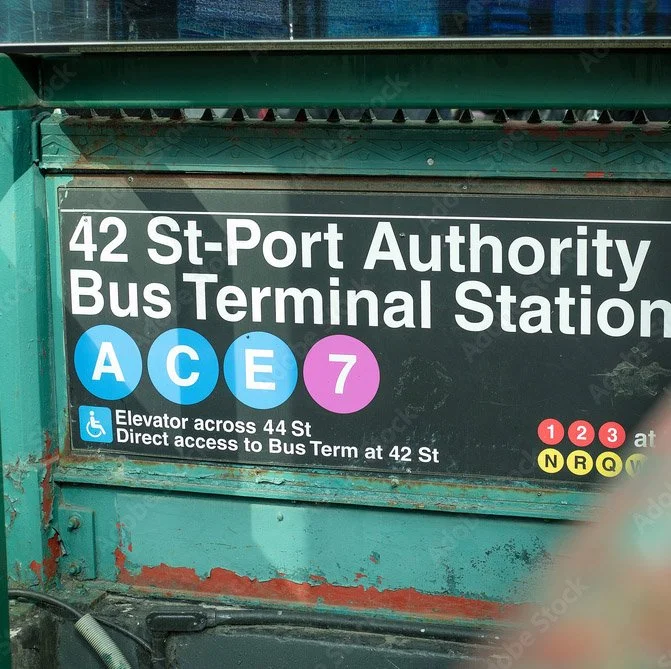
The Port Authority Bus Terminal on Eighth Avenue in Midtown has been, by almost any measure, one of the worst large public buildings in New York City for decades.