Designing for Longevity in Commercial Space
The Standard Model Is Wasteful In commercial real estate, the standard practice for decades has been the white box. When a tenant lease ends, the space is typically gutted to bare walls and concrete, presenting a blank slate to the next tenant. It is common, and it is wasteful. Tenants absorb the cost of a full build-out every five to ten years, and the demolished materials go straight to a landfill.
A More Rational Approach.
There is a more rational approach gaining ground, and it is called Design for Disassembly. Rather than treating a commercial interior as a temporary installation, the idea is to design spaces that can adapt, reconfigure, and follow the client when circumstances change.
Modular Systems in Practice.
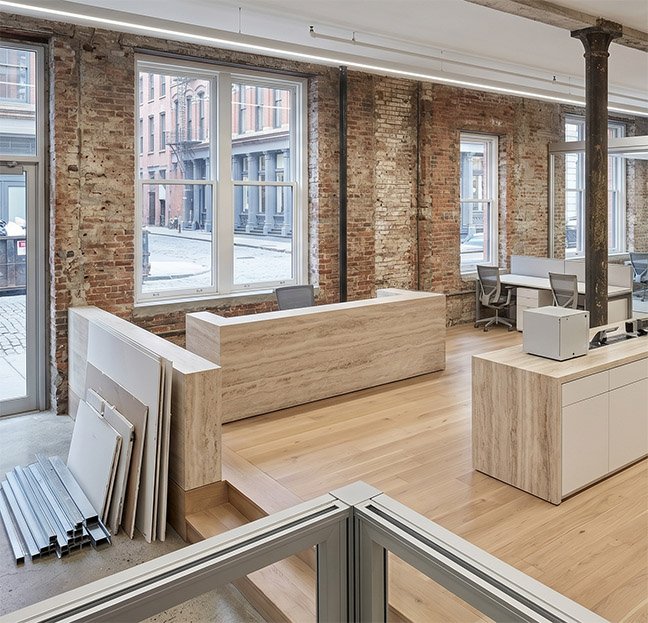
In practice, this means moving away from static drywall and toward modular architecture. High-performance acoustic glass partitions and precision-engineered aluminum frames can achieve the same acoustic zoning as traditional construction. The difference is that when a company grows or a lease expires, these systems can be unbolted, reconfigured, or relocated rather than demolished. The upfront cost is higher, but for tenants with longer time horizons or multiple locations, the math can work in their favor.
The Existing Building as an Asset.
The approach also changes how we read an existing space. In our current work with KUU in Soho, the strategy is to insert a new, functional program into the existing architectural envelope without triggering a full gut renovation. The historic fabric of the building becomes an asset rather than an obstacle, which keeps timelines shorter and material costs lower.
Materials That Last and Breathe
Material selection follows the same logic. We specify for longevity rather than trend. Vein-cut travertine and wide-plank white oak hold up and age well, which reduces the pressure to refresh a space every few years. On the health side, low-VOC adhesives and finishes are a baseline requirement on our projects, not a premium add-on. The same standard we applied to the Monterey Club steam room renovations applies to office environments. People spend most of their waking hours in these spaces, and air quality matters.
When It Works and When It Does Not
Design for Disassembly is not a universal solution. It works best when tenants have leverage in their lease negotiations, when the landlord agrees on what can be removed at lease end, and when the client has a realistic expectation of staying long enough to recover the upfront investment. Those conditions do not always align. But when they do, building with adaptability in mind produces spaces that perform better, waste less, and hold their value longer than the conventional alternative.