
What ICFF 2026 Got Right: The Problem with Building Materials Isn't What You Think
The Blind Spot In Sustainability
There is a version of sustainability that architects and designers have gotten comfortable with. Energy performance, carbon footprints, recycled content percentages, and LEED points. That conversation is important and has made real progress. But ICFF 2026 put a spotlight on a different problem, one that gets far less attention. The materials inside buildings are often quietly making people sick, and most architects specifying them have no idea.
Spotlighting Material Health
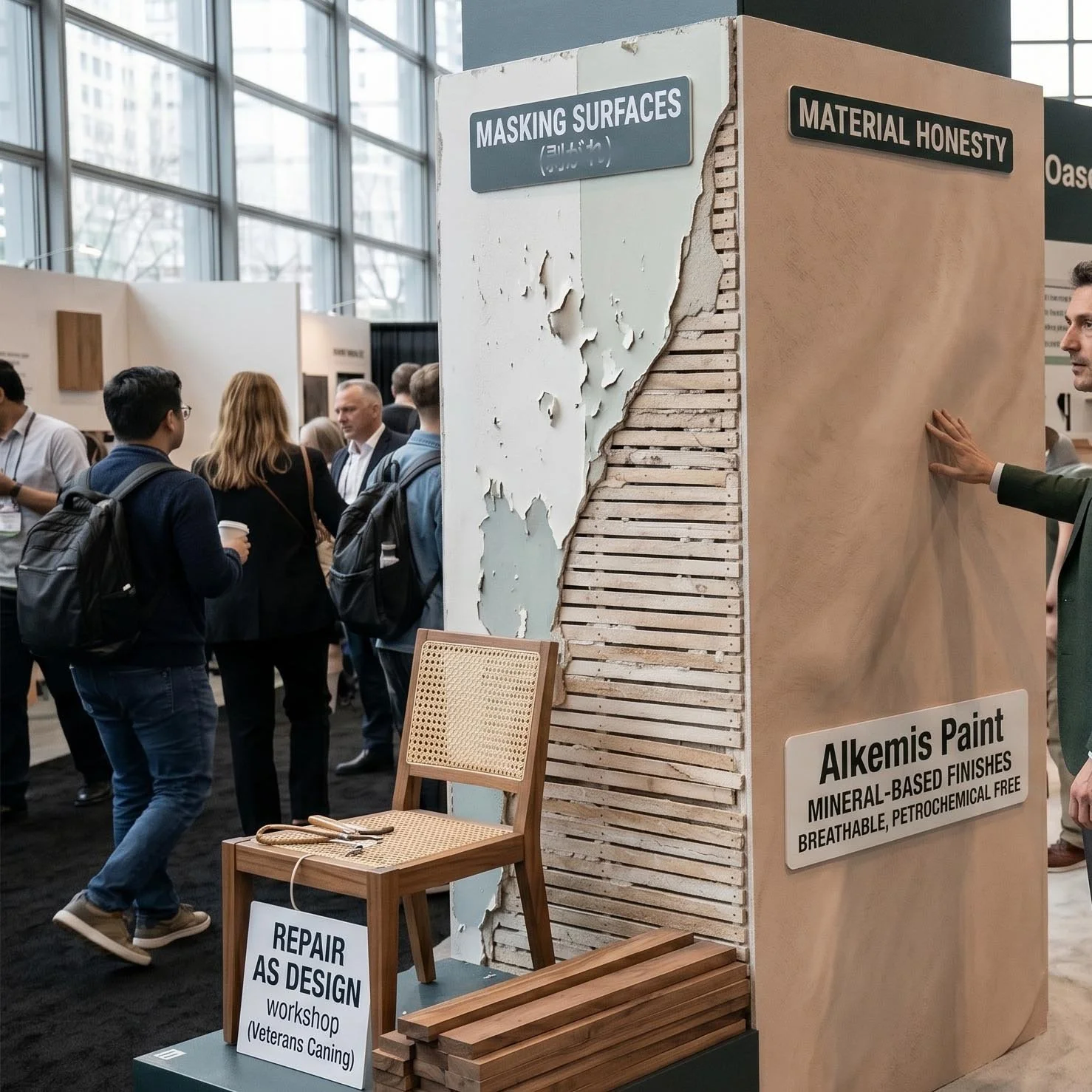
The exhibit led by Jonsara Ruth, Design Director of the Healthy Materials Lab at Parsons School of Design, was one of the more substantive things on the floor. The new Materials section within The Oasis explored bio-based materials, healthier alternatives, and forward-thinking production processes. For the past decade, the lab has argued that the chemical makeup of building materials deserves as much attention as climate responsivity.
Breaking The Specification Habit
The architecture industry tracks energy use obsessively, but it often ignores human health. The materials actually sitting inside these buildings (the adhesives, the paints, the flooring) are frequently loaded with compounds that affect the people occupying the space. The default behavior is to specify the usual products, trust the manufacturer marketing, and move on. It is the path of least resistance. We are forcing ourselves to change that habit on our current New York projects.
Filtering For Health At KUU Soho
For the interior design and property analysis we are managing for KUU Soho, material health is a primary filter. It is not just about the layout. It is about questioning the hidden chemicals in standard finishes and finding accessible, healthier alternatives that meet the physical demands of a high-traffic commercial space.
Mitigating Toxicity At The Monterey Club
The stakes are higher in specialized environments. For the steam room renovations at the Monterey Club, material selection is critical. High heat and moisture accelerate the off-gassing of volatile organic compounds from standard grouts, sealants, and backing materials. We have to be meticulous about what we specify because the environmental conditions leave no room for toxic compounds.
The Last Line Of Defense
Architects are, in practice, the last line of defense between a manufacturer's product and the person who will live with it. Putting the Healthy Materials Lab on the floor at ICFF is an acknowledgment that the industry needs to close the gap between what it knows and what it actually does during specification. The work they are doing is not new, but having a platform as commercially oriented as ICFF treat it as a centerpiece is a massive shift. It is exactly the direction the profession needs to go.
Architects are, in practice, the last line of defense between a manufacturer's product and the person who will live with it.