
From Cozy to Code: Redefining the Fireplace as a Sustainable Design Feature
Written By Irving Yee Architecture
The fireplace has transitioned from being a simple cozy element into a sustainable design component that serves as a high-performance feature.
Few things anchor a winter interior quite like the warmth and visual appeal of a fireplace. This design element creates a strong impression that brings to mind both traditional sentiments and feelings of comfort. However, from an efficiency standpoint, the open hearth design of traditional architecture often fails to make the grade.
A masonry fireplace creates a massive energy drain in homes that otherwise maintain complete sealing and high-performance standards. It tends to pull conditioned, heated air up the chimney, which forces the HVAC system to work harder to replace that lost warmth. The fire creates a comfortable atmosphere, but it produces two negative effects: decreasing indoor temperature and increasing heating expenses.
Present-day architects who want to create sustainable homes need to solve a specific design challenge. We must find a way to preserve the emotional experience of the fireplace while ensuring the system meets, or even exceeds, modern efficiency standards.
The Three Pillars of Modern Sustainable Fireplaces
The solution is found in moving beyond the open hearth to adopt highly engineered, closed-combustion and electric systems. These options create the desired atmosphere while maintaining the integrity of the building envelope.
1. High-Efficiency Wood Stoves and Inserts
The most environmentally friendly option for clients who want to experience the genuine sounds and aromas of wood is to use an EPA-certified closed system that has been carefully engineered.
The Principle: These units operate through an insulated firebox combined with a tight-sealing glass door. Crucially, they draw combustion air from outside, or from a dedicated external vent, rather than pulling already heated air out of the room.
Performance: A traditional fireplace operates at approximately 10 percent efficiency, which results in most of the generated heat escaping through the chimney. Wood stoves and inserts that meet EPA certification standards operate at 70 to 80 percent efficiency, making them true heat-producing devices. These systems typically present themselves as modern closed boxes that integrate seamlessly into wall or masonry environments through their simple design.
2. The Rise of Ventless Options (Ethanol and Gel)
Ventless systems provide architects with complete design flexibility because they function primarily as decorative elements that do not rely on heat production.
Ethanol Fireplaces: These operate through the combustion of bioethanol liquid fuel, which produces smokeless, soot-free, and creosote-free flames. The system functions without the need for a chimney, flue, or venting system. This approach provides excellent adaptability because designers can position the fire element within walls and joinery or use freestanding glass cylinders.
A Note on Performance: While these units eliminate flue-related energy losses, they require oxygen for combustion and generate water vapor and carbon dioxide, which become part of the indoor environment. For this reason, they are typically sized for smaller applications and are best used in well-ventilated spaces rather than as a primary heat source.
3. Zero-Emission Electric Fireplaces
The design of electric fireplaces has undergone major changes since their early appearance as artificial-looking models. Current designs have evolved into sophisticated design elements that function as modern architectural features.
The Technology: The system produces an authentic three-dimensional flame appearance through a combination of LED lighting, holographic projections, and reflective surfaces. The heat is typically generated by a small forced-air heater that can operate independently from the visual flame.
Architectural Flexibility: These systems operate through standard electrical outlets, allowing installation in nearly any space, including bathrooms and central interior walls. Electric fireplaces represent a sustainable option because they produce no on-site emissions, maintain high energy efficiency, and provide immediate visual impact.
The systems adopted by modern architects preserve the fireplace as a traditional home centerpiece that offers warmth and atmosphere while meeting contemporary performance standards. Rather than eliminating this element entirely, designers should focus on redefining it through responsible and efficient solutions
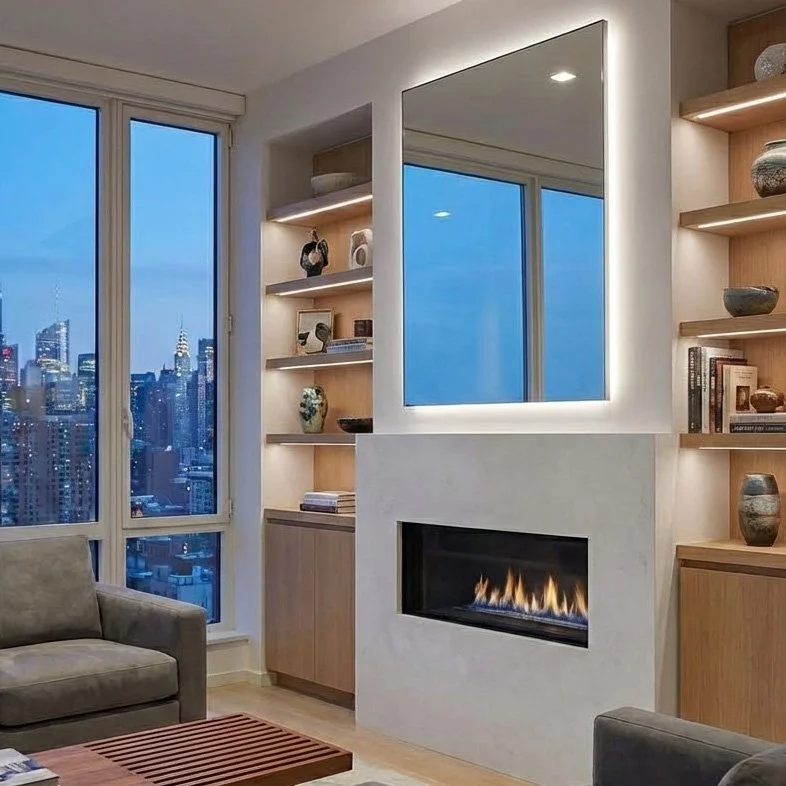
Sustainable Fireplaces