
The Cedar Standard: Why NYC’s Water Towers Are Still the Practical Solution
In a city defined by steel skyscrapers and glass curtain walls, it seems almost contradictory that the crown jewels of the skyline are made of wood.
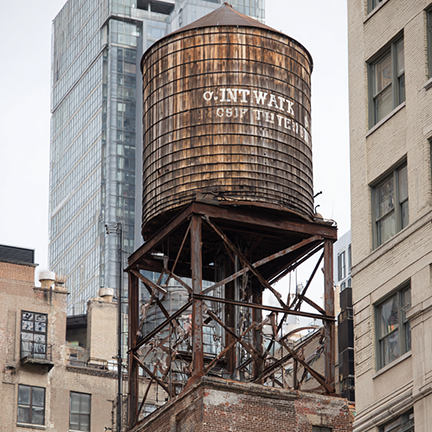
The rooftops display thousands of wooden barrels which can be seen by looking up. They appear to be artifacts which belonged to a past time. To the untrained eye, they appear to be antiquated holdovers that modern architecture simply forgot to replace.
However, these wooden tanks are not forgotten antiques. They are actually a masterpiece of sustainable engineering. The cedar tank stands as the preferred option for architects and builders because it provides a superior solution to infrastructure needs through its elegant and efficient design.
The Invisible Limit: The Elevation Factor
To understand why these towers exist, you first have to understand the limits of municipal infrastructure. Municipal water pipes maintain a pressure that can only push water up to a certain height.
For any building taller than a few stories, the water must be mechanically pumped to the roof. Once there, it is stored in these tanks and gravity takes over, feeding the water down to the sinks and showers below. This gravity-fed system is remarkably energy-efficient because the building’s pumps do not need to run constantly to maintain pressure. The system operates for a short time to replenish the tank when water levels reach their minimum point.
Why Wood Beats Steel: A Sustainability Case Study
The selection process for building tank installations when choosing between wood and steel remains a primary consideration for construction projects. Wood provides superior sustainability and performance benefits when compared to steel because it excels in several essential aspects.
1. Natural Insulation Wood is a phenomenal natural insulator. In freezing winters, the thick wooden staves prevent the water inside from turning into a block of ice. The system protects water temperature from dangerous levels while it maintains both cool and safe drinking water conditions during summer heat.
The Steel Problem: A steel tank has poor thermal resistance. To prevent freezing, steel tanks require expensive, energy-consuming electrical heaters to run throughout the winter.
2. The "Swelling" Seal: The construction of traditional wooden tanks depends solely on natural wood swelling properties instead of using any glues, sealants, or chemical substances. They are built simply from wooden planks held in place by metal hoops.
The system operates as follows: The tank starts to leak when it receives its initial water supply. This is part of the process. The wood absorbs water within a short period, which causes it to expand and create an absolute water barrier through its natural expansion process. The system operates without requiring toxic sealants or liners which tend to break down during operation.
3. Efficiency of Replacement Sustainability is also about longevity and waste. A wooden tank typically lasts for several decades. When it is time for a replacement, the old wood is easily dismantled and often reclaimed for furniture or flooring.
The Cost Reality:
A wooden tank requires a smaller financial investment for its construction process, and a small team can complete the installation in a very short timeframe. A comparable steel tank can cost significantly more, takes much longer to install, and requires heavy machinery that disrupts the surrounding environment.
Conclusion
Today, specialized companies maintain the thousands of tanks that dot the skyline. These wooden towers prove that the most environmentally friendly solutions do not need to be the latest technological advancements. The design, which unites with physical laws, natural elements, and urban characteristics, represents the best solution.
Sustainable Fireplaces