
The Space We Forgot We Had: Gotham Park and the Nine Acres Under the Brooklyn Bridge
If you have ever walked across the Brooklyn Bridge from Brooklyn to Manhattan, you know the feeling. You spend 30 minutes crossing one of the great engineering achievements of the 19th century, reach the Manhattan side, and end up standing in what is essentially a Department of Transportation parking lot, wondering what to do next.
One of the most visited landmarks in the world, drawing roughly 19,000 pedestrians a day, deposits people into a forgotten stretch of land that nobody seemed to know what to do with. A nonprofit called Gotham Park is changing that.
What Is Actually Happening Here
Gotham Park is a grassroots nonprofit converting nine acres of underused city-owned land beneath the Manhattan side of the Brooklyn Bridge into a public park. The footprint runs from Park Row to South Street, sitting at the intersection of Chinatown, Two Bridges, Tribeca, the South Street Seaport, and the Financial District.
It started simply. In 2021, a group of neighbors showed up to a Community Board meeting and asked why this land was sitting empty. A nonprofit was incorporated, funding was raised, and things moved faster than most New York City public space projects ever do.
The first acre opened on May 24, 2023, on the 140th anniversary of the Brooklyn Bridge's opening. A second phase followed in November 2024. In June 2025, Mayor Adams announced $50 million in city funding and cut the ribbon on a newly revitalized section called The Arches. The full plan calls for seven distinct outdoor areas, each responding to the specific character of the spaces underneath those granite piers.
Why This Is a Sustainability Story
The land was already there. For years it served as a contractor staging area during bridge restoration work, and before that it was largely closed off after September 11. Nobody built anything new here. No land was cleared, no new footprint created. The city just finally decided to use what it already had. That is rarer than it sounds.
The planting strategy is native and biodiverse, meaning less irrigation, no chemical maintenance, and real ecological value. In a dense corridor like Lower Manhattan, that is not nothing.
The site also sits in flood territory. This part of the city took a serious hit during Superstorm Sandy in 2012. Gotham Park has built climate resilience into its framework from the start, treating the park as part of a broader strategy for making Lower Manhattan more adaptive as sea levels rise. The green infrastructure here is functional, not decorative.
There is also an equity piece that does not get enough attention in sustainability conversations. Green space in New York is not distributed fairly. Chinatown and Two Bridges have historically received far less public investment than wealthier neighborhoods. A free, permanently public park here is a meaningful correction. Community health and social equity are part of sustainability whether the design world acknowledges it or not.
The Brooklyn Banks
The Brooklyn Banks were a legendary skateboarding spot under the bridge approach, active from the 1980s through the early 2000s and documented in decades of skate photography and video. They were closed during bridge construction and became one of those New York places people talked about in the past tense.
As part of the Gotham Park revitalization, the Banks have been restored and reopened in partnership with The Skatepark Project and Vans. Places have memory, and honoring that memory while bringing a space back to life is harder than it looks.
What Comes Next
The long-term plan includes converting the vaulted spaces inside the bridge's Manhattan anchorage into public use: a community hub, a New York Public Library branch, and a Brooklyn Bridge Museum. There is also a proposed Maker Space tied to the bridge's engineering history.
The project also creates a real pedestrian connection between City Hall, the Seaport, the Financial District, and the 9/11 Memorial. Those 19,000 daily bridge crossers finally have a logical place to land.\
The Bigger Point
Gotham Park is not a signature architecture project. No starchitect, no glossy renderings. It is a community-driven effort to take land the city already owned and do something useful with it.
Some of the best urban interventions are not about building more. They are about paying attention to what is already there and deciding it deserves better.
Go walk through it.
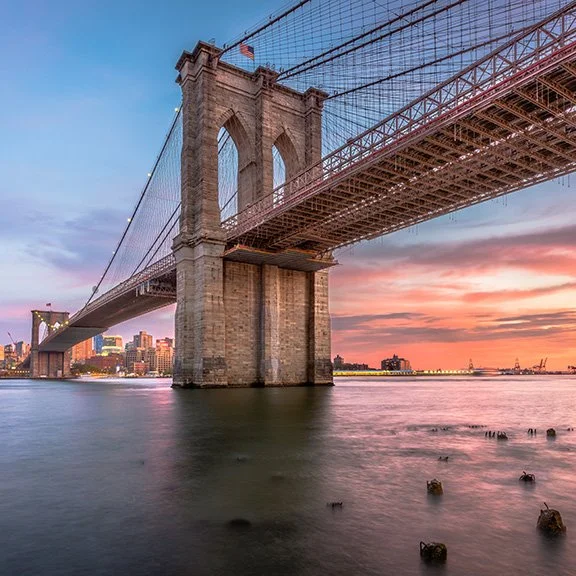
Gotham Park is a grassroots nonprofit converting nine acres of underused city-owned land beneath the Manhattan side of the Brooklyn Bridge into a public park.