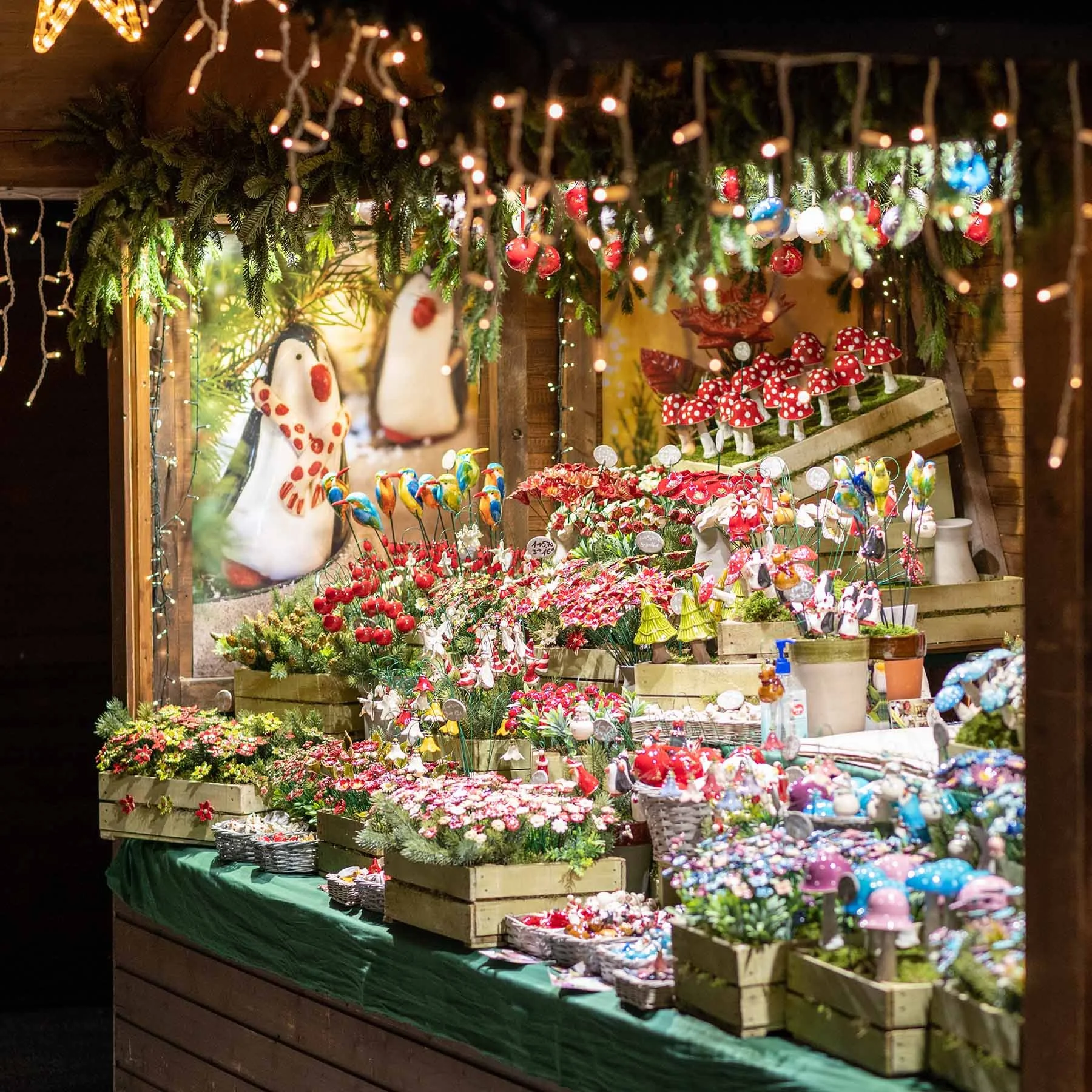
Built to Last: The Future of Sustainable Holiday Markets
Every December, New York City transforms into a holiday destination. Leading the charge are major operators like Urbanspace, who curate the spectacular markets in Union Square, Columbus Circle, and Bryant Park. They do an incredible job creating these festive villages that millions of people visit every year.
Urbanspace and similar operators excel at providing the infrastructure. They often set up uniform, high-quality tents or kiosks that give the market a cohesive, polished look, they set the stage perfectly. The design challenge we face as an industry isn't about the market operators, It is about the inherent nature of temporary retail itself.
The "Pop-Up" Paradox
Even in the best-managed markets, there is a logistical challenge that falls on the individual vendors. While the operator provides the shell, the vendor is usually responsible for the interior fit-out. They have to turn an empty space into a branded, cozy shop in a very short amount of time.
This is where the industry-wide cycle of "build-and-burn" comes in. Because vendors are working with tight budgets and strict time limits, they often have to rely on fast, cheap materials for their shelving, flooring, and displays. Once the season ends, vendors without large warehouses often have no choice but to discard these custom interior builds. It is a limitation of the traditional temporary retail model. The structures are temporary, so the materials are treated as disposable.
Designing the Second Life
The opportunity here is for architects, designers, and vendors to follow the lead of operators like Urbanspace. Just as the operators use modular, reusable kiosks, the interiors could be designed with the same "circular" principles.
We could treat the booth interior as a permanent asset, not a disposable prop.
1. The Strategy: A Kit of Parts
Instead of building custom shelving from scratch every year, the design industry could move toward a "Core & Skin" approach for interiors.
The Universal System: Designers could develop high-quality, modular racking systems for vendors. These could be metal or durable wood, designed to be bolted together.
Vendor Expression: The vendor focuses on decoration rather than construction. They could apply their own "skin" to the system, like recycled fabric or clamped wood panels, which could be easily removed and stored without destroying the core frame.
2. Smart Material Choices
For vendors who do build custom displays, we could promote "end-of-life" thinking in the design phase.
Mechanical Fasteners: Using bolts and clamps instead of glue or nails could ensure that materials could be taken apart and reused next year.
Pure Materials: Using single materials (like all aluminum or all untreated wood) could make recycling simple. Mixing materials usually makes recycling impossible.
3. Why This Could Work
Adopting these circular principles could align perfectly with the high standards set by operators like Urbanspace.
For the Vendor: It could reduce the stress of the setup. They could deploy a proven kit rather than building from scratch.
For the Operator: It could maintain the high visual standard of the market. High-quality, reusable materials could simply look better than single-use plastics or cheap plywood.
For the Environment: It could drastically reduce the waste left behind in January.
Conclusion
Market operators in NYC have already solved the big problem by providing high-quality, reusable venues. The next step is for the design community to help vendors match that sustainability on the inside. By standardizing the interior fit-out, we could ensure that the festive joy of the season is matched by a positive environmental legacy.