
NYC Outdoor Dining Season Opens April 1. Here Is What Separates the Spaces That Work From the Ones That Don't
Spring is back, and so is outdoor dining in New York City. On April 1, roadway cafes are permitted to open across the five boroughs under the city's Dining Out NYC program, and restaurant owners are once again setting up tables, chairs, and structures on sidewalks and streets that have been quiet since November.
It sounds simple. It is not.
The history of outdoor dining in New York City over the past five years is essentially a story about what happens when design is treated as an afterthought. Some restaurants built loyal outdoor followings that extended their seasons and grew their revenue. Many others spent significant money on structures that looked temporary from day one, deteriorated within a season, and either got abandoned or dismantled under city pressure. The difference between those two outcomes was almost always a design decision made before a single table hit the pavement.
What the City Actually Allows
The Dining Out NYC program permits two types of setups. Sidewalk cafes, placing tables directly in front of the restaurant facade, are allowed year-round. Roadway cafes, occupying the parking lane adjacent to the curb, run from April 1 through November 29. Both require permits, fees, and compliance with specific design requirements covering clearances, overhangs, electrical connections, drainage, and materials. Roadway setups must be modular and removable for street cleaning and seasonal storage.
This is where most restaurant owners either make a smart investment or an expensive mistake.
The Design Mistake Most Restaurants Make
The most common mistake is treating the outdoor space as a temporary extension of the restaurant rather than a permanent part of the business. A folding table and two chairs technically satisfy the requirement. They do not create an experience that makes someone choose your restaurant over the one next door.
New York City diners have options. When the weather is good and the city is alive, the outdoor space is the first thing a potential customer sees. It is a billboard, a first impression, and a dining room all at once. The restaurants that have built strong outdoor programs understand that the design of the space has to be continuous with the identity of the restaurant inside. That thinking does not happen by accident.
What Good Outdoor Restaurant Design Actually Involves
Weather flexibility matters more than most people plan for. New York spring weather is unpredictable. Retractable canopies, adjustable side panels, and heating elements that extend comfortable temperatures extend the season meaningfully and directly affect how many covers a restaurant does. These need to be integrated into the structure from the beginning, not added as afterthoughts.
Acoustic management is underrated. Streets are loud. A well-designed outdoor space creates enough enclosure for conversation without sealing guests off from the energy of the city. That balance is harder to achieve than it sounds and almost impossible to fix once the structure is built.
Lighting is the detail most outdoor spaces get wrong. Overhead string lights became the default pandemic aesthetic and have since become invisible through overuse. Lighting that is actually designed for the space, considering natural light at different times of day and the shift from lunch to dinner service, creates a fundamentally different experience for the guest.
Materials are the sustainability argument. A structure built from cheap materials to minimize upfront cost will typically last one or two seasons before it looks worn or falls out of compliance. Every replacement cycle consumes new materials, generates construction waste, and costs money that a better initial investment would have avoided. The city's current program already mandates open-air designs that require a higher construction standard than the early pandemic sheds. Working within those requirements with quality materials produces a space that looks better after three seasons than it did on opening day.
The Permit Reality
The Dining Out NYC application requires structural documentation, DOT compliance, insurance, fees, and often coordination with landlords and adjacent property owners. Restaurant owners who navigate this alone while running a kitchen tend to make design compromises to simplify the application. The result is a space that gets approved but never quite works the way it should.
An architect who understands the program requirements can help develop a design that is both compliant and genuinely well conceived. The permit process becomes a framework for good decisions rather than an obstacle to getting outside.
What a Well-Designed Outdoor Space Does for a Restaurant
More covers during good weather means more revenue. A space that extends comfortable dining from May through October rather than just June through September adds weeks of full outdoor capacity. A space that looks genuinely considered attracts customers who might otherwise walk past and becomes a neighborhood landmark that people reference, photograph, and return to.
The sustainability case and the business case are the same case. A space built with quality and intention does not end up in a dumpster after eighteen months. It gets maintained, improved, and used for years. That is what durable design looks like in practice.
The season opens April 1.
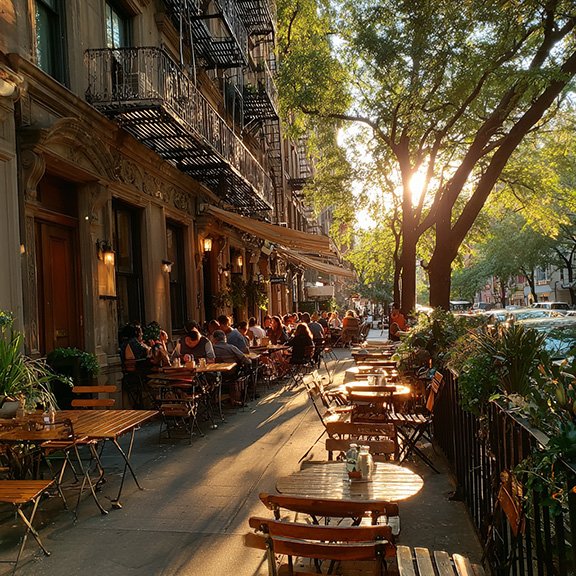
Spring is back, and so is outdoor dining in New York City.