
What to Do With a Manhattan Office Building That No Longer Works as an Office
New York City has many offices and perhaps not enough apartments. The math on that problem is finally starting to move, and from a sustainability standpoint, the way it's moving matters.
Across Lower Manhattan and Midtown, several significant office towers are currently in the process of becoming residential buildings. Pre-war Financial District towers, mid-century commercial blocks, even former corporate headquarters are all part of the pipeline. New York leads the country in office-to-residential conversions, with thousands of new apartments in various stages of development. A meaningful share of those units are reserved for affordable housing.
What makes this wave of conversions significant beyond the housing numbers is what isn't happening: demolition.
When an existing building is converted rather than torn down and rebuilt, the carbon already embedded in its structure stays embedded. That embodied carbon, locked into the concrete, steel, and masonry over decades of construction, is not released. A new ground-up tower of comparable size would generate substantial upfront carbon emissions just from producing and installing its structural materials, before a single resident moves in. Adaptive reuse avoids that entirely.
Office vacancy in Manhattan has been sitting near historic highs.
A significant portion of the city's older office stock cannot compete with the towers major tenants are chasing. These buildings were not going to fill back up. Conversion became the logical exit, and it turns out to be the lower-carbon one too.
Policy has helped make the numbers work. New York's tax abatement program for conversions ties financial incentives to affordable housing commitments, which has unlocked financing from major institutional lenders who would otherwise sit out. The program has a deadline, which is part of why so many conversions are breaking ground right now.
The technical challenges are real, and the most fundamental one is physical. New York City law requires every bedroom to have a window. Old office buildings were not designed with that in mind. They were built as deep, massive floor plates, because offices can function without natural light in every corner. Apartments cannot. If you place units around the glass perimeter of a converted floor, you are left with a large, dark, windowless cavity in the center of the building. That space cannot legally become a bedroom. Architects and developers spend enormous effort solving this problem: cutting light wells into the building, reconfiguring cores, or simply accepting that some floor plans will be smaller or less efficient than a purpose-built residential tower would allow. It is solvable, but it is not free, and it is why not every old office building makes a practical conversion candidate.
Facade upgrades, which are common in these projects, create an additional opportunity. Done well, they can significantly improve the building's energy performance, reducing operational emissions over its lifetime alongside the upfront carbon savings from not demolishing it.
There is also a land use argument worth making.
These conversions are adding dense residential units in transit-rich, walkable neighborhoods, which is where lower-carbon living actually happens. The building type and the location together shape a significant part of how residents move through the city, and dense urban neighborhoods near transit are consistently the better outcome.
The interesting thing about this moment is that the financial incentives, the policy environment, and the carbon argument are all pointing in the same direction at the same time. That alignment does not last forever, and the current program has a deadline. Whether that produces a lasting shift in how New York thinks about its aging office stock, or just a concentrated burst of activity before the window closes, is still an open question.
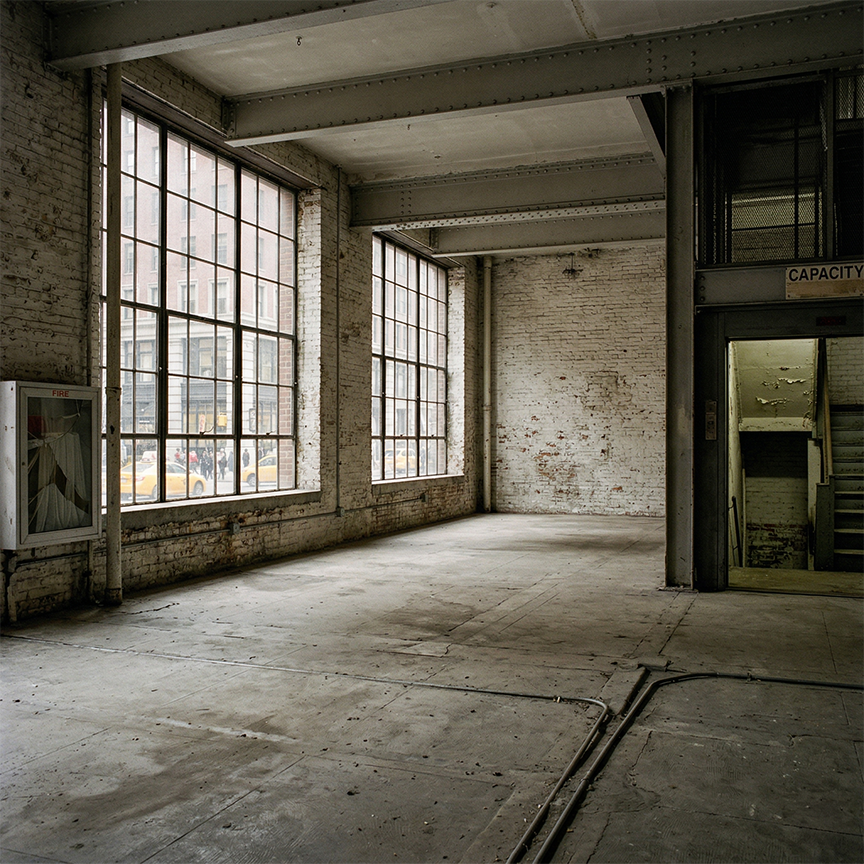
When an existing building is converted rather than torn down and rebuilt, the carbon already embedded in its structure stays embedded.