
Milan's Olympic Village Was Built to Outlast the Games
Every Olympics leaves a permanent mark on its host city. The track record is mostly bad: Athens, Rio, and Sochi all left behind stadiums and venues that deteriorated after the closing ceremony. Milan tried something different with its 2026 Winter Games, and the results are worth paying attention to.
What Was Actually Built
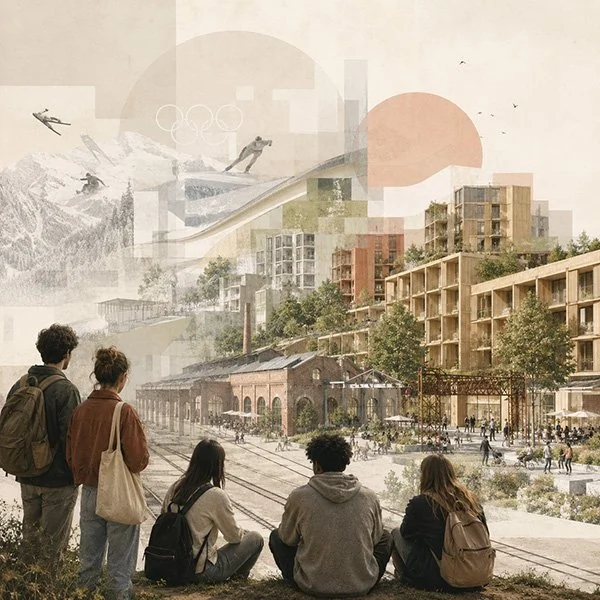
The Milan Olympic Village sits in the Porta Romana district, on a former 19th-century rail yard that had been sitting underused for decades. The complex covers roughly 60,000 square meters and includes six new residential buildings made with mass timber construction, plus two historic railway structures restored and converted into communal spaces. Construction took 30 months and wrapped up in June 2025, one month ahead of the original delivery deadline. During the Games (February and March 2026), the village hosted roughly 1,300 to 1,500 athletes.
The Post-Olympic Plan
The conversion to student housing was the plan before construction even started, not an afterthought. Unit layouts, building systems, and material choices were selected with student housing in mind from day one. Reservations for the 1,700 student beds were already open before the Games ended, for the 2026-2027 academic year, with 450 units offered at subsidized rates. That covers roughly 6% of Milan's student housing demand, making it Italy's largest publicly supported student housing development.
Buildings adjacent to the park and railway near the Olympic Square are being converted into affordable housing. The main plaza becomes a permanent public square with retail, restaurants, bars, cafes, and outdoor space for farmers markets and community events.
Sustainability
The project achieved NZEB (Nearly Zero Energy Building) standards and holds LEED Gold and WiredScore Platinum certifications. The specs include a one megawatt rooftop photovoltaic system, stormwater reuse, heat pumps, and EV charging. Mass timber construction and prefabricated facade panels kept embodied carbon significantly lower than a comparable concrete or steel build. The two historic railway structures were restored with their original masonry, wood, and iron left exposed rather than covered up.
Why It Matters
The Porta Romana site had been an underused gap in the city for decades. The Olympics gave it a deadline and a funding mechanism, but the design was oriented toward the neighborhood's long-term future, not the two-week event. A forgotten rail yard became an athlete village, which is now becoming a permanent student neighborhood. Each stage was planned to set up the next one.
That is the model worth copying.
The conversion to student housing was the plan before construction even started, not an afterthought