
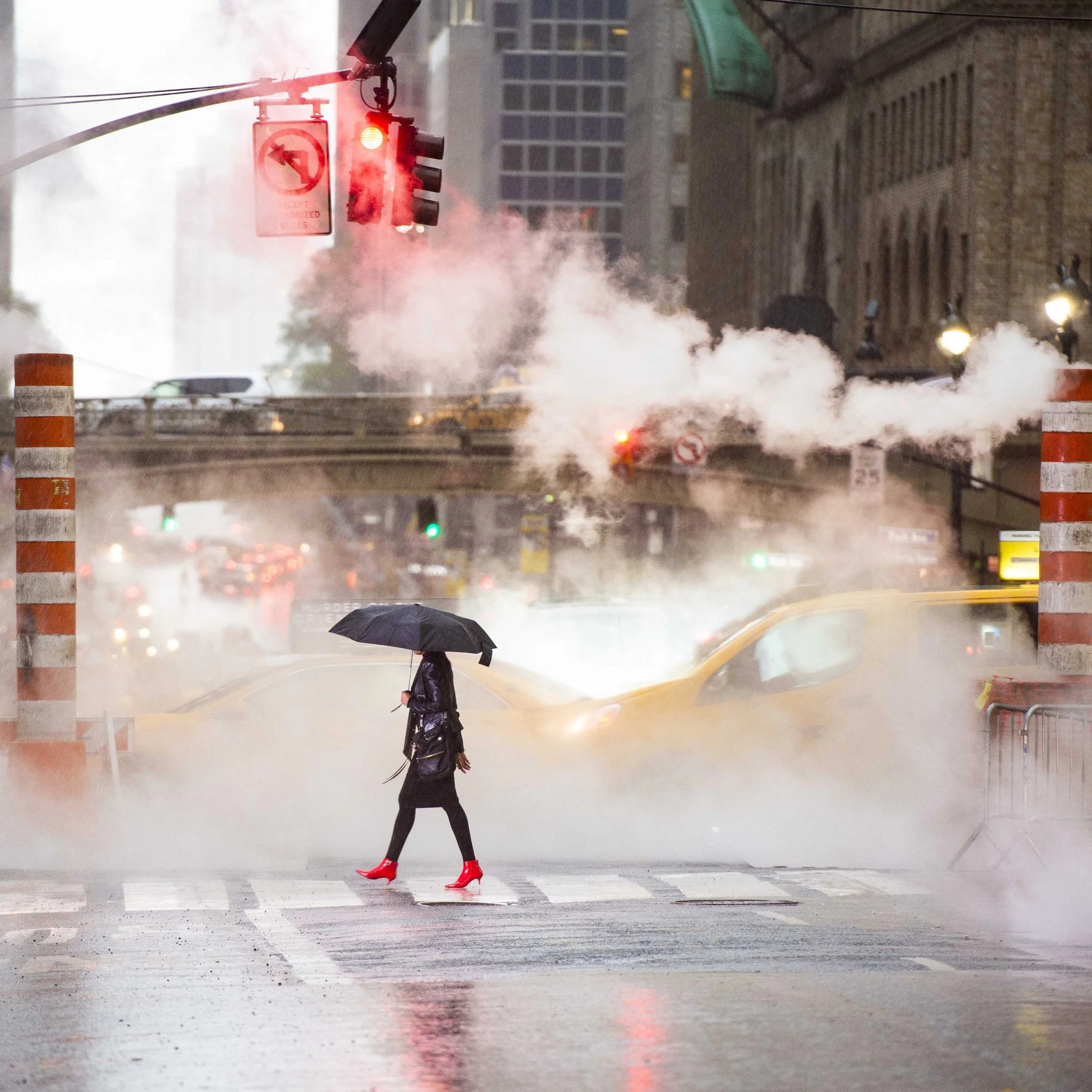
As temperatures fall in New York, the white clouds rising from the street become easier to notice. Often emerging through tall orange-and-white striped stacks, they are a familiar part of the city’s landscape.
The steam system operates throughout the year. Cold air makes its street-level plumes more visible as water vapor cools and condenses into tiny droplets. What appears seasonal is a glimpse of infrastructure working beneath Manhattan in every season.
A Shared System Beneath Manhattan
Con Edison’s district steam network delivers heat through underground pipes to connected buildings in parts of Manhattan. The system has served the city since the nineteenth century, linking individual properties to a shared source of thermal energy.
Buildings use that steam for heating and hot water. Some also use it to drive cooling equipment, maintain humidity, or sterilize medical equipment. These applications help explain why the network remains useful beyond the winter heating season.
Why the Streets Steam
Street-level plumes can come from leaking steam or from underground water encountering hot equipment. The striped stacks direct the vapor above pedestrians and traffic while repairs are arranged. Their presence generally means Con Edison has identified and assessed the condition.
Water vapor itself is invisible. The white cloud is made of tiny droplets formed as the vapor cools in the surrounding air. Colder conditions can make that cloud more apparent, giving the stacks their familiar association with winter.
What It Means for Building Design
Connecting to district steam can eliminate the need for an individual boiler plant, freeing space and reducing the equipment a building must operate. In Manhattan, where service and basement space are valuable, that can influence how a property is planned.
Buildings still require their own piping, controls, and equipment to receive and distribute heat. Those systems need maintenance, and their condition affects how effectively the supplied energy is used.
For architects, the network illustrates how building design depends on infrastructure beyond the property line. Decisions about mechanical space, maintenance, and energy supply connect an individual building to systems serving the surrounding city.
The Environmental Question
District steam can benefit from cogeneration, which produces electricity and useful heat together. Recovering that heat makes better use of fuel than generating heat and electricity separately.
Its environmental performance still depends on how the energy is produced. Con Edison’s steam system relies largely on natural gas, so its potential role in reducing emissions should be distinguished from its current fuel use. A shared network offers opportunities for improvement, but centralization alone does not make its heat carbon-free.
The company is exploring technologies including electric boilers, industrial heat pumps, and thermal storage to reduce the system’s carbon footprint. Their contribution will depend on implementation and the energy used to operate them.
The potential advantage is shared: cleaner steam production could reduce the emissions associated with purchased heat across connected buildings.
The next time a striped stack appears on a cold morning, it offers a glimpse of something usually hidden: the relationship between individual buildings and the infrastructure that keeps the city running.
District steam can benefit from cogeneration, which produces electricity and useful heat together. Recovering that heat makes better use of fuel than generating heat and electricity separately.