
On April 25, New York City Removes Its Cars. What Happens Next Is Worth Paying Attention To.
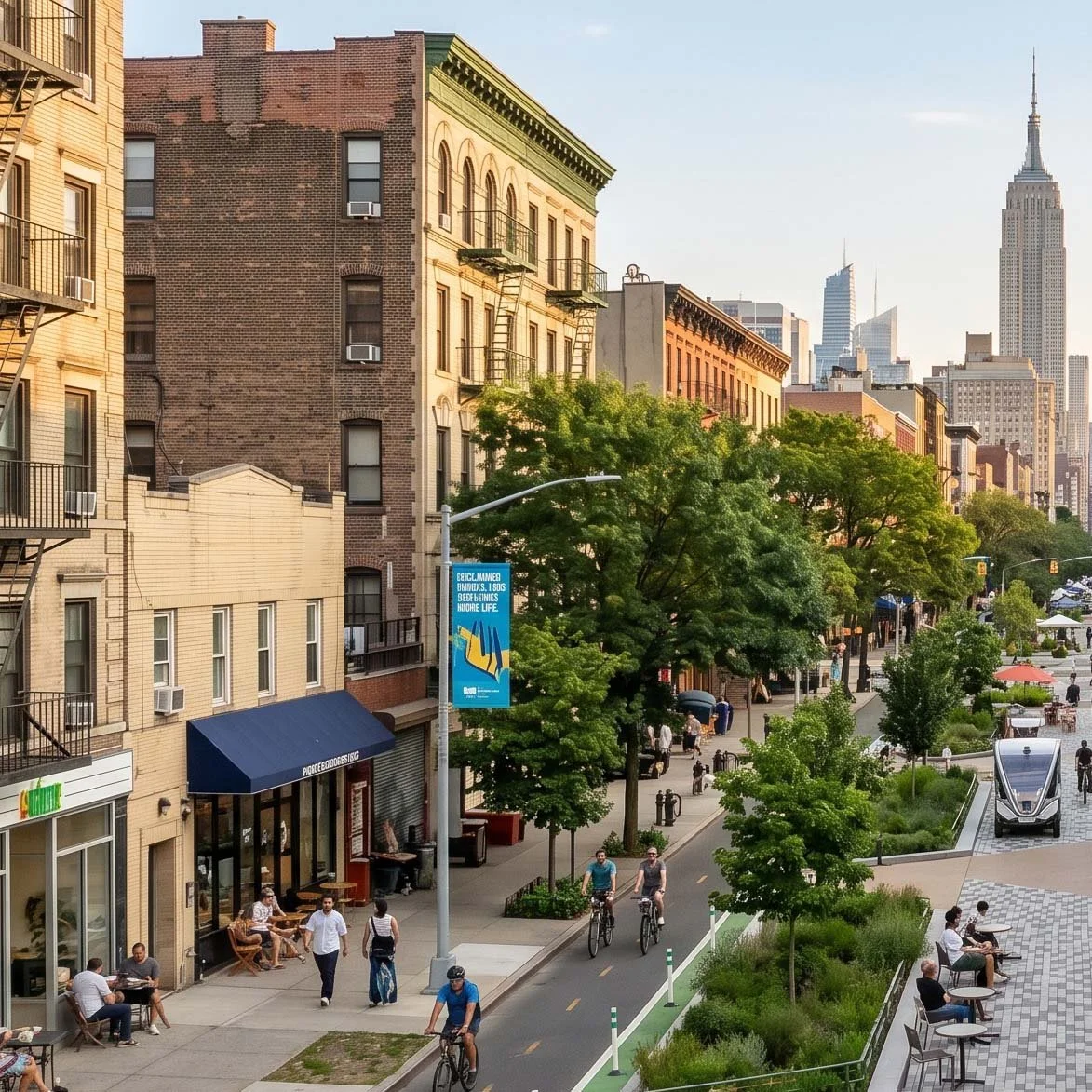
What Is Actually Happening…For six hours on Saturday April 25, dozens of streets across all five boroughs will close to vehicle traffic. No cars, no trucks, no honking. Just pavement, and what people do with it when it is suddenly theirs.
NYC DOT's Car-Free Earth Day, now in its tenth year, runs from 10 a.m. to 4 p.m. and connects open streets, plazas, and over 1,000 miles of the city's bike network. In Manhattan, Broadway closes from 17th Street to 46th Street. Free Citi Bike rides are available all day. Neighborhoods that spend 364 days a year organized around the movement of vehicles spend one day organized around the movement of people.
It sounds like a festival. It is also an argument about how cities should be designed.
Why Streets Are a Climate Issue
Transportation is the second largest source of carbon emissions in New York City. When you walk down the middle of Broadway on a Saturday morning and realize you can hear yourself think, that point lands differently than any infographic could deliver it.
The Architecture Angle
Streets in New York occupy roughly 30 percent of the city's total land area, almost entirely dedicated to the storage and movement of private vehicles. Architects and urban designers have spent decades arguing that this allocation is not inevitable, it is a choice, and choices can be remade. Car-Free Earth Day makes that argument experiential rather than theoretical.
What It Means for Buildings
The design implications are concrete. Wider sidewalks extend the usable outdoor season for retail and restaurants, reducing energy consumption inside the building. Trees in former parking lanes sequester carbon and reduce the urban heat island effect, which directly affects how hard a building's mechanical systems work in summer. Less impervious surface means better stormwater management, reducing pressure on a sewer system that already struggles during heavy rain. These are measurable outcomes of street design decisions, and they affect how every building on the block performs.
A Different Street, A Different Building
The buildings lining Broadway between 17th and 46th Streets were not designed with a car-free street in mind. What Car-Free Earth Day reveals, briefly, is what those buildings could feel like with a different street in front of them. Ground floor retail that backs up to six lanes of moving traffic functions differently than retail that opens onto a pedestrian corridor. Cities making permanent changes to street allocation are seeing that difference play out in real renovation and redesign decisions.
Where This Is Heading
The Open Streets program that Car-Free Earth Day draws on has added permanent and seasonal car-free streets throughout the five boroughs since 2020. What the city is still working out is the design language and political will to make these changes permanent and equitable. That is a question architects, planners, and building owners will be part of answering over the next decade.
One Day as a Prototype Six hours of Broadway without traffic is a prototype. It shows what the space can hold, how people use it when given the option, and what a city sounds like when the design assumptions change.
The event is free. April 25, 10 a.m. to 4 p.m., across all five boroughs. Full map at nyc.gov/carfreenyc.
What Is Actually Happening…For six hours on Saturday April 25, dozens of streets across all five boroughs will close to vehicle traffic. No cars, no trucks, no honking. Just pavement, and what people do with it when it is suddenly theirs.